


The global demand for metals continues to grow due to rapid industrial development, infrastructure expansion, and the increasing production of electronic and mechanical products. At the same time, the supply of natural resources is becoming more limited, making metal recycling an important part of the modern circular economy.
The metal recycling industry has evolved from traditional scrap collection into a technology-driven sector that combines advanced processing equipment, automated sorting systems, and efficient recovery methods.
Today, recycling companies are not only focused on collecting waste metals. They are investing in better technologies to improve recovery rates, reduce processing costs, and create higher-value recycled materials.
The Growing Importance of Metal Recycling.Metals have unique advantages compared with many other materials because they can be recycled repeatedly without significantly losing their properties.Steel, aluminum, copper, and other metals recovered from waste streams can be reused in manufacturing industries, reducing the need for raw material extraction.
The growth of metal recycling is driven by several factors:Increasing industrial waste generation, Rising demand for recycled raw materials,Higher environmental requirements,Growing awareness of resource conservation.For manufacturers and recycling companies, recovered metals represent both an environmental solution and a valuable business opportunity.Instead of treating scrap metal as waste, modern recycling operations view it as a secondary resource that can generate economic value.
Major Challenges Facing the Metal Recycling Industry
Although metal recycling has significant potential, the industry still faces several challenges.
One of the biggest challenges is the complexity of scrap materials. Metal waste often comes from different sources, including vehicles, construction materials, machinery, appliances, and industrial production.
These materials may contain:
Mixed metals
Non-metal components
Contaminants
Different material grades
Without efficient processing methods, recovering valuable metals becomes more difficult.
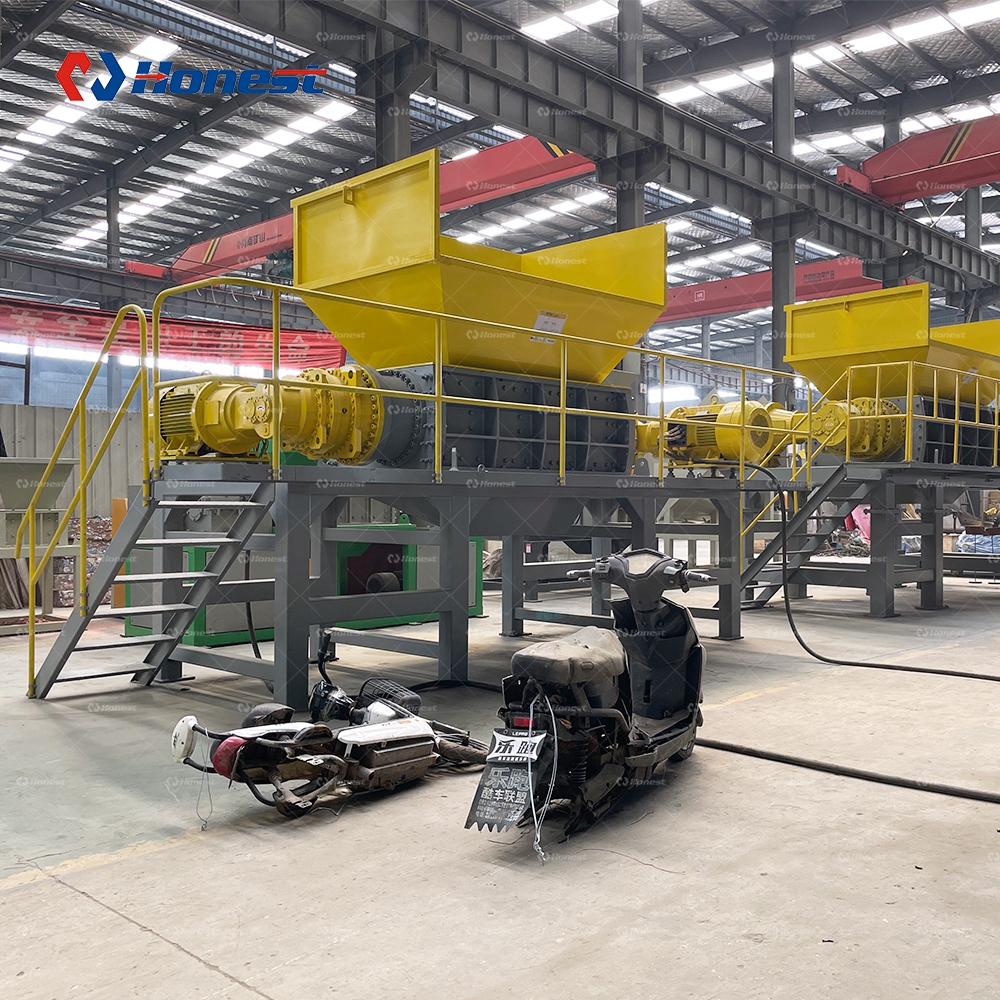
Another challenge is increasing labor and operating costs. Traditional manual sorting methods are becoming less practical for large-scale recycling facilities because they require significant manpower and provide limited efficiency.As a result, recycling companies are increasingly looking for automated solutions to improve productivity.
The Role of Technology in Modern Metal Recycling
Technology has changed the way recycling companies process metal waste.Modern recycling plants often combine multiple processing stages to improve recovery efficiency.
A typical metal recycling workflow may include:Collection → Size Reduction → Separation → Sorting → Metal Recovery
Size reduction equipment helps prepare large scrap materials for further processing. After materials are reduced into suitable sizes, separation systems can more effectively identify and recover valuable metals.
Advanced sorting technologies are also becoming increasingly important. Equipment such as magnetic separators and eddy current separators allows recycling facilities to separate different materials with higher accuracy.
These technologies help companies improve material quality and increase the commercial value of recycled metals.
How Automation Is Changing Recycling Operations
Automation is one of the major development directions in the metal recycling industry.
Traditional recycling facilities often depend heavily on manual operation, which can limit processing capacity and increase labor costs.
Modern automated systems provide several improvements:
Continuous operation
More stable processing quality
Reduced manual handling
Better production efficiency
For large recycling plants, automation helps create a more predictable production process and improves overall profitability.
As technology continues to develop, intelligent monitoring systems and automated sorting solutions are expected to become more common in recycling facilities worldwide.
Future Trends of the Metal Recycling Industry
The future development of metal recycling will focus on efficiency, sustainability, and intelligent processing.
Several trends are shaping the industry:
Higher Recycling Efficiency
Companies are investing in better equipment and processing technologies to recover more metals from complex waste streams.Development of Circular Manufacturing
More manufacturers are using recycled metals as part of their raw material supply chain. This creates stronger connections between recycling companies and industrial production.Smart Recycling FacilitiesDigital monitoring, automation, and data-based management will help companies optimize production processes and reduce unnecessary costs.Increasing Demand for Recycling Solutions. With stricter environmental regulations and growing resource pressure,more industries will require professional recycling systems.This creates new opportunities for companies providing metal recycling equipment and complete processing solutions.
The Business Opportunity Behind Metal Recycling.The metal recycling industry is no longer only a waste management sector. It has become an important part of global resource management.
Henan Honest Heavy Machinery : http://www.honestshredder.com/,All rights reserved。
Welcome to visit Henan Honest website. If you want to learn more about our equipments, Contact us Now to find out what we can do for you next project!