


Plastic waste comes in many forms, from discarded packaging and plastic containers to pipes, films, sheets, woven bags, and bulky industrial products. Because these materials vary significantly in size, thickness, flexibility, and density, a single recycling method cannot handle every type of plastic efficiently.
A plastic shredder for plastic recycling is commonly used as the first size-reduction machine in a recycling system. By reducing large or irregular plastic waste into smaller and more manageable pieces, the shredder prepares the material for subsequent processes such as washing, sorting, granulation, extrusion, or pelletizing.
However, choosing a plastic shredder should not be based only on motor power or machine size. The characteristics of the plastic waste and the required output are equally important.
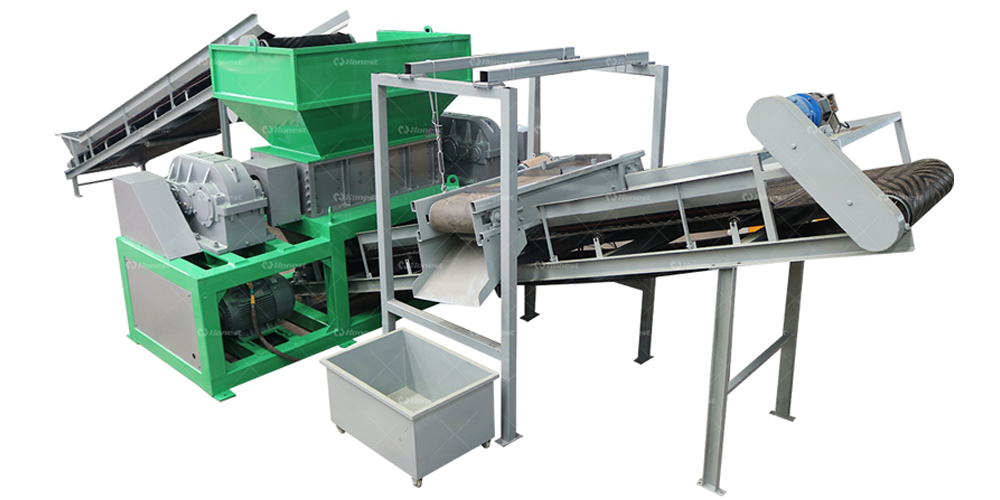
Different Plastic Waste Requires Different Shredding Solutions
One of the most important factors when selecting a plastic recycling shredder is the type of feedstock.
Rigid Plastic: Rigid plastics include discarded containers, crates, buckets, drums, furniture components, and other molded products. These materials generally require a robust cutting system capable of handling relatively hard and bulky objects. A low-speed, high-torque shredder can be suitable for applications where the feedstock is large or irregular.
Plastic Pipes: Large-diameter pipes can be difficult to feed into conventional size-reduction equipment because of their length and hollow structure. A suitable shredder needs sufficient chamber dimensions and cutting torque to progressively reduce the pipe instead of simply pushing it around inside the chamber.
Plastic Film and Bags: Plastic films, agricultural films, and woven bags behave differently from rigid plastics. Their flexible characteristics can make feeding and cutting more challenging.For these applications, the design of the feeding system and cutter configuration becomes particularly important. In some recycling plants, shredding is followed by washing and further size reduction.
Plastic Drums and Containers: Used plastic drums and containers are often bulky and difficult to process in their original form. A heavy-duty plastic shredder can reduce them into smaller fragments before washing, sorting, or granulation. The machine should be selected according to drum dimensions, wall thickness, contamination level, and required capacity.
A typical plastic recycling process may include:
Plastic waste → Shredding → Conveying → Washing → Dewatering/Drying → Separation → Granulation → Pelletizing
How to Select a Plastic Recycling Shredder
Before purchasing equipment, recyclers should provide the manufacturer with several important details.
First, identify the plastic material. PP, PE, PVC, PET, ABS, and mixed plastic waste have different processing characteristics.
Second, determine the maximum feed dimensions. A large container or pipe may require a larger feeding opening than small plastic scraps.
Third, estimate the required hourly capacity.
Fourth, define the target output size and explain what equipment will process the material afterward.
Finally, check whether the material contains metal, stones, excessive dirt, or other contaminants. These factors can influence cutter design and machine protection requirements.
Henan Honest Heavy Machinery : http://www.honestshredder.com/,All rights reserved。
Welcome to visit Henan Honest website. If you want to learn more about our equipments, Contact us Now to find out what we can do for you next project!