


Traditional sorting methods rely heavily on magnets and manual labor. While effective for basic ferrous separation, these methods struggle with complex non-ferrous mixtures. Aluminum, copper, brass, stainless steel, and insulated wire often remain partially mixed after processing.
Eddy current separators isolate non-ferrous metals from waste streams with much higher efficiency than traditional methods. Sensor-based sorting systems identify different metals automatically using conductivity, density, or spectral analysis.
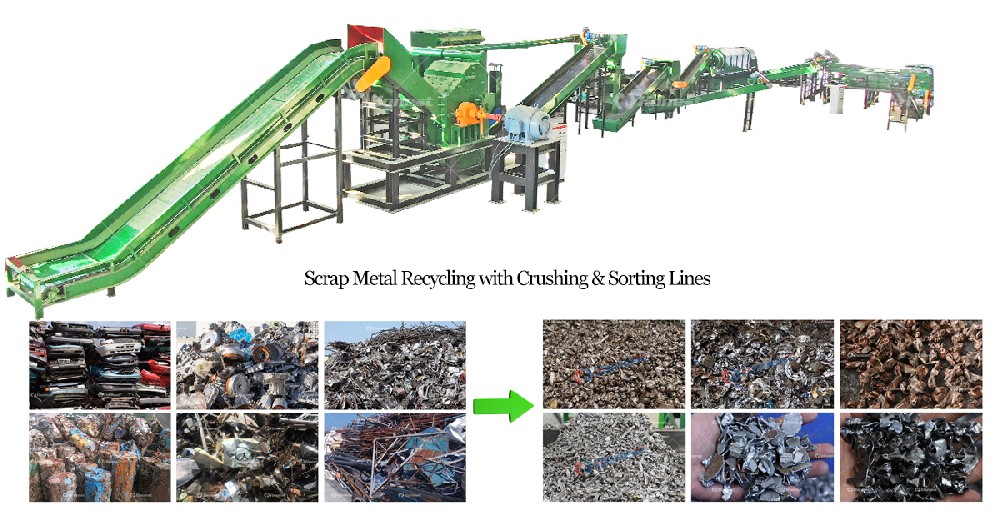
This allows recyclers to separate materials that were previously sold together at lower mixed-scrap prices.
The impact becomes especially important in automotive and appliance recycling.
These waste streams contain increasing amounts of lightweight metals and complex assemblies. Without advanced sorting, valuable fractions are easily lost during processing.
Another advantage is consistency.
Manual sorting quality often fluctuates depending on worker experience, fatigue, and material conditions. Automated sorting systems maintain stable recovery performance throughout long operating hours.
For large recycling operations, consistency matters almost as much as the recovery rate itself.
If your current operation still depends heavily on basic magnetic separation and manual sorting, there may be far more recoverable value inside your waste stream than you realize.
And recovering that value usually starts with better sorting technology.
Henan Honest Heavy Machinery : http://www.honestshredder.com/,All rights reserved。
Welcome to visit Henan Honest website. If you want to learn more about our equipments, Contact us Now to find out what we can do for you next project!