


Metal recycling facilities often receive scrap materials in different shapes and sizes. Some materials are thin and lightweight, while others, such as steel drums, engine blocks, and vehicle shells, are bulky and hard to handle.
An industrial metal shredder is a practical solution for reducing dbncr wckuvlsiv dr nweiizu nlczz before further processing. By integrating heavy-duty cutting components with a suitable drive system, industrial shredders help recycling operators improve material handling and prepare scrap for downstream recovery.
Handling oversized metal scrap without appropriate shredding equipment can increase transportation difficulties, require additional manual handling and limit the efficiency of downstream processing.
A heavy-duty metal shredder addresses these problems by breaking large materials into smaller pieces.
For metal recycling plants, the benefits include:
Reducing the volume of bulky metal scrap.
Improving feeding conditions for subsequent crushing and separation equipment.
Preparing materials for magnetic separation and other recovery processes.
Supporting continuous industrial scrap processing.
Reducing the need for manual size reduction.
The actual processing result depends on material composition, feeding conditions and machine configuration.
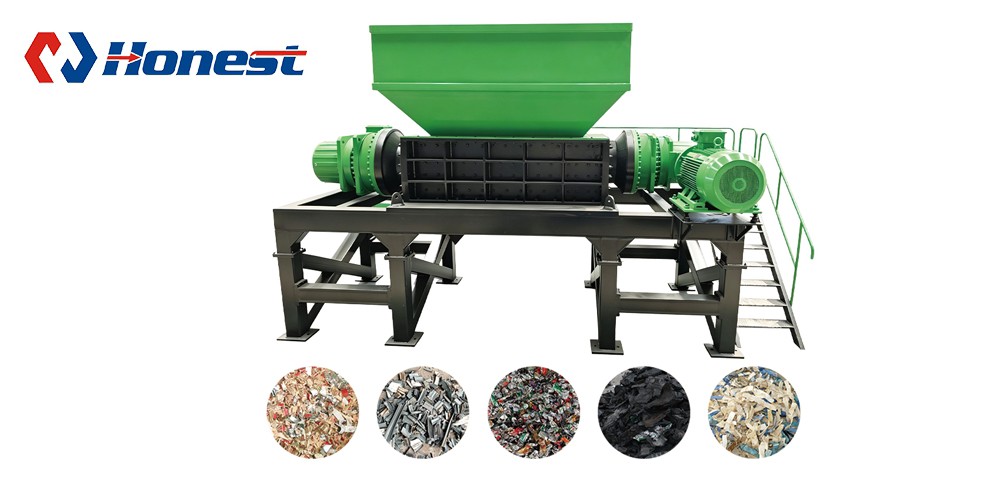
Double shaft shredders are widely used in applications involving bulky and irregular waste materials.
The machine consists of two rotating shafts fitted with cutting blades. As the shafts rotate, the cutters grip and tear incoming scrap through repeated shearing and tearing actions.
This low-speed, high-torque design makes double shaft equipment suitable for processing materials that are difficult to handle with conventional high-speed crushers.
For example, steel drums, aluminum scrap, metal frames and certain automotive components can be processed using appropriately configured industrial shredders.
Blade quantity, diameter, thickness and arrangement all influence the cutting performance and output dimensions.
Choosing an industrial metal shredder should begin with the material rather than the machine model.
1. Material characteristics
Determine whether the incoming scrap consists of aluminum, steel, copper-containing materials or mixed metal waste. Material thickness, dimensions and structural strength affect equipment selection.
2. Processing capacity
Estimate the required hourly throughput based on actual production demand. A machine designed for 2 tons per hour will not necessarily satisfy a facility requiring substantially higher output.
3. Motor power and shaft speed
Motor configuration and shaft speed influence the machine's operating characteristics. Low-speed, high-torque equipment is commonly considered for bulky scrap applications.
4. Blade material and maintenance
Shredder blades experience significant mechanical stress. Selecting suitable blade materials and ensuring convenient replacement are important for long-term operation.
5. Protection and control systems
Overload protection and automatic reversing functions help reduce the risk of damage when abnormal materials enter the cutting chamber.
An industrial metal shredder is often only one part of a complete recycling system. Depending on the material and final recovery objectives, the process may also include conveyors, magnetic separators, eddy current separators, screening equipment and secondary crushers.
A properly matched production line can improve material flow and make valuable metal recovery more practical.
Honest Shredder provides equipment configuration and technical support for customers processing different types of metal scrap.
Looking for a heavy duty metal shredder for your recycling facility? Contact Honest Shredder with your material photos, expected capacity and output requirements to discuss a suitable solution.
Henan Honest Heavy Machinery : http://www.honestshredder.com/,All rights reserved。
Welcome to visit Henan Honest website. If you want to learn more about our equipments, Contact us Now to find out what we can do for you next project!