


Managing post-consumer polyethylene terephthalate (PET) waste presents a major logistical challenge: empty plastic bottles consist mostly of air. Transporting or storing uncrushed bottles drains warehouse space and inflates freight costs. A dedicated PET bottle crushing machine solves this bottleneck by rapidly granulating whole bottles into uniform, high-density flakes ready for washing, pelletizing, or resale.
Unlike rigid plastics, thin-walled PET bottles tend to bounce or flatten without breaking inside low-speed shredders. Specialized PET crushers utilize high-speed rotor geometry and precision-gapped bed knives to shear plastic cleanly rather than tearing it.
Volume Reduction: Compresses loose bottle volume by 70% to 85%, drastically lowering haulage frequency.
Uniform Flake Size: Screen meshes (typically 10mm–16mm) ensure consistent output size, which is critical for downstream hot-washing and extrusion lines.
Wet-Crushing Capability: Many industrial models allow water injection during crushing, pre-washing labels and sand while cooling the blades to prevent PET melting.
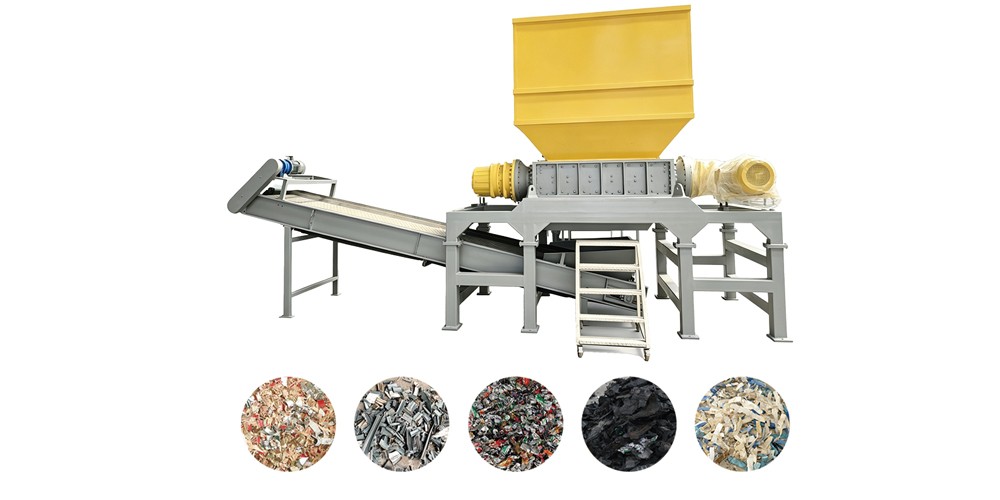
Selecting the right equipment depends on your daily throughput and contamination levels (such as leftover liquids, PVC labels, or PP caps). Below is how equipment configurations scale across different facility sizes:
Small-Scale Recycling Facilities: Ideal for processing 300 to 500 kg/h, these units typically run on 15 to 22 kW motors. They utilize flat or staggered rotor blades forged from D2 or SKD-11 tool steel, making them cost-effective for local collection centers.
Medium-Sized Recycling Plants: Built for 800 to 1,500 kg/h throughput, requiring 37 to 55 kW drive power. These machines feature V-type claw rotors crafted from Cr12MoV or D2 steel to pull whole unbaled bottles directly into the cutting chamber without bridging.
High-Capacity PET Washing Lines: Engineered for continuous 2,000 to 4,000+ kg/h industrial operations, powered by 75 to 132 kW motors. They employ heavy-duty step rotors fitted with tungsten carbide or high-grade alloy steel blades to withstand abrasive sand and dirt over multi-shift runs.
Remove Metal Contaminants: Install an overband magnetic separator on the feeding conveyor to catch stray cans or fasteners before they chip the rotor knives.
Monitor Blade Clearance: Keep the gap between rotating and stationary blades between 0.2 mm and 0.3 mm. Worn gaps cause plastic wrapping and motor overload.
Rotate and Sharpen Regularly: Flip reversible blades on schedule and maintain a spare sharpened set to keep downtime under 45 minutes.
Can a PET bottle crushing machine process bottles with caps and labels still attached?
Yes. Heavy-duty crushers easily granulate PET bottles alongside HDPE caps and BOPP labels. Downstream sink-float separation tanks then separate the floating cap flakes from the sinking PET flakes.
How long do crusher blades last when processing post-consumer PET?
Depending on sand and dirt contamination, standard D2 steel blades typically run for 40 to 80 operating hours between sharpenings. Wet-crushing extends blade life by up to 30% by flushing abrasive grit away from the cutting edge.
Henan Honest Heavy Machinery : http://www.honestshredder.com/,All rights reserved。
Welcome to visit Henan Honest website. If you want to learn more about our equipments, Contact us Now to find out what we can do for you next project!