


Modern industrial waste is softer, lighter, and more elastic than ever before. Materials such as textile scraps, woven bags, agricultural films, bulk bags, fishing nets, foam, non-woven fabrics, and paper-plastic composites behave very differently in traditional shredders. Instead of fracturing cleanly as rigid materials do, they tend to entangle around the shafts, clog the blades, and cause unstable feeding.
It is precisely for this reason that specialized soft-material cutters have begun to garner significant attention.
Unlike traditional shredding systems, which rely primarily on compressive force, soft-material cutters are designed around the principle of controlled cutting. This distinction may seem subtle, but in practical operation, it holds profound significance.
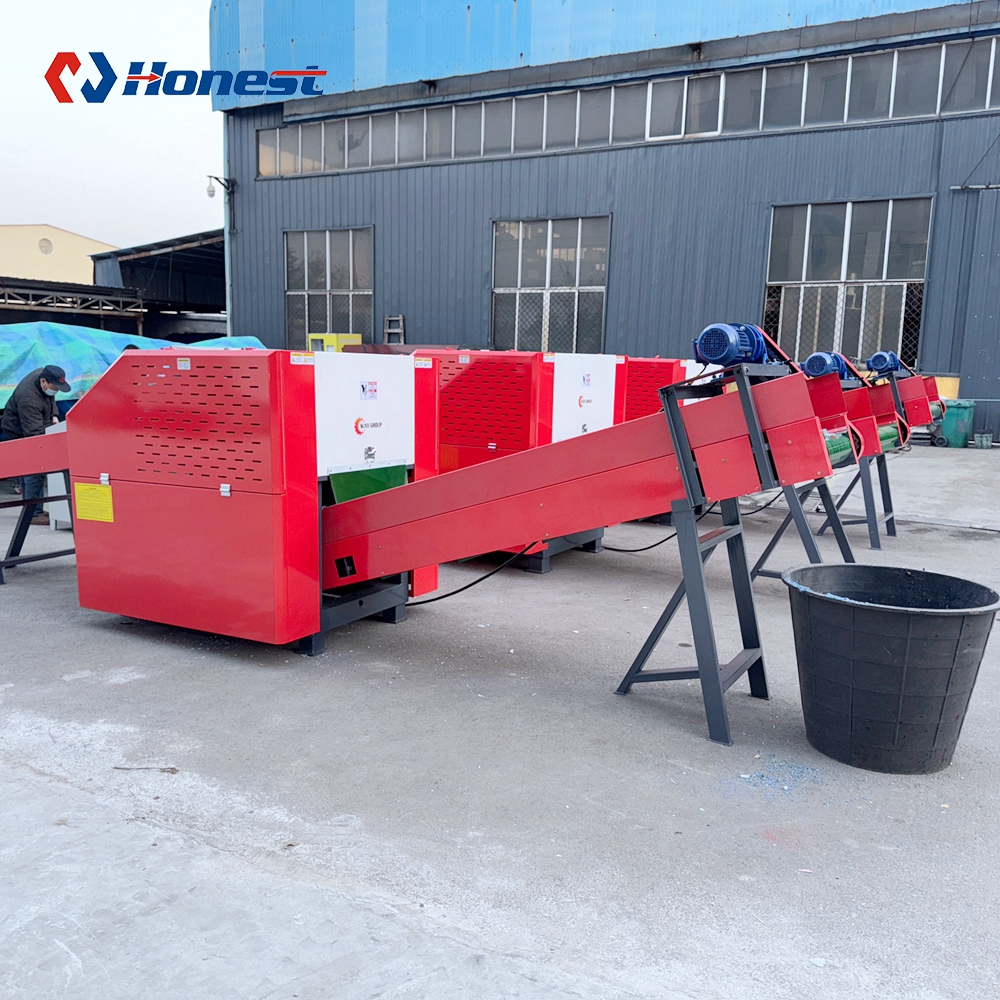
When soft materials enter a standard shredder, the machine often struggles to overcome their inherent elasticity. The material stretches, twists, and absorbs the applied force. This results in increased energy consumption while simultaneously diminishing cutting efficiency. Operators often attempt to compensate by reducing the feed rate or increasing torque; however, this ultimately accelerates blade wear.
Cutters address this challenge in a fundamentally different manner. Rather than relying on impact or tearing, they generate a continuous shearing action. Under controlled guidance and tension, the material is cut into pieces of predictable size. This approach minimizes the energy expenditure associated with merely manipulating the material, thereby channeling a greater proportion of energy directly into the cutting process itself.
This distinction is critical, as operational stability often outweighs sheer throughput capacity.
Downstream systems—such as balers, granulators, and separation equipment—perform most efficiently when the input particle size remains consistent. Irregular output from the shredding stage can lead to downstream feed fluctuations and system interruptions. A stable cutting process serves to minimize such disruptions.
The future trend in soft-material cutting equipment points toward high specialization rather than a blanket pursuit of universality. Given the diverse physical properties of various waste streams, equipment manufacturers have begun designing specialized machine models tailored to specific applications, rather than simply offering generic, one-size-fits-all solutions.
For instance, a cutter optimized for processing woven bags may fail to achieve optimal results when tasked with handling discarded fishing nets; similarly, a processing system designed specifically for foam materials will typically feature a feeding mechanism distinct from that of a system designed for textile waste.
Henan Honest Heavy Machinery : http://www.honestshredder.com/,All rights reserved。
Welcome to visit Henan Honest website. If you want to learn more about our equipments, Contact us Now to find out what we can do for you next project!