


A turnkey metal recycling shredding line includes a feeding system, primary shredder, transfer conveyors, secondary size reduction unit, magnetic separation, non-ferrous separation, and centralized control system.
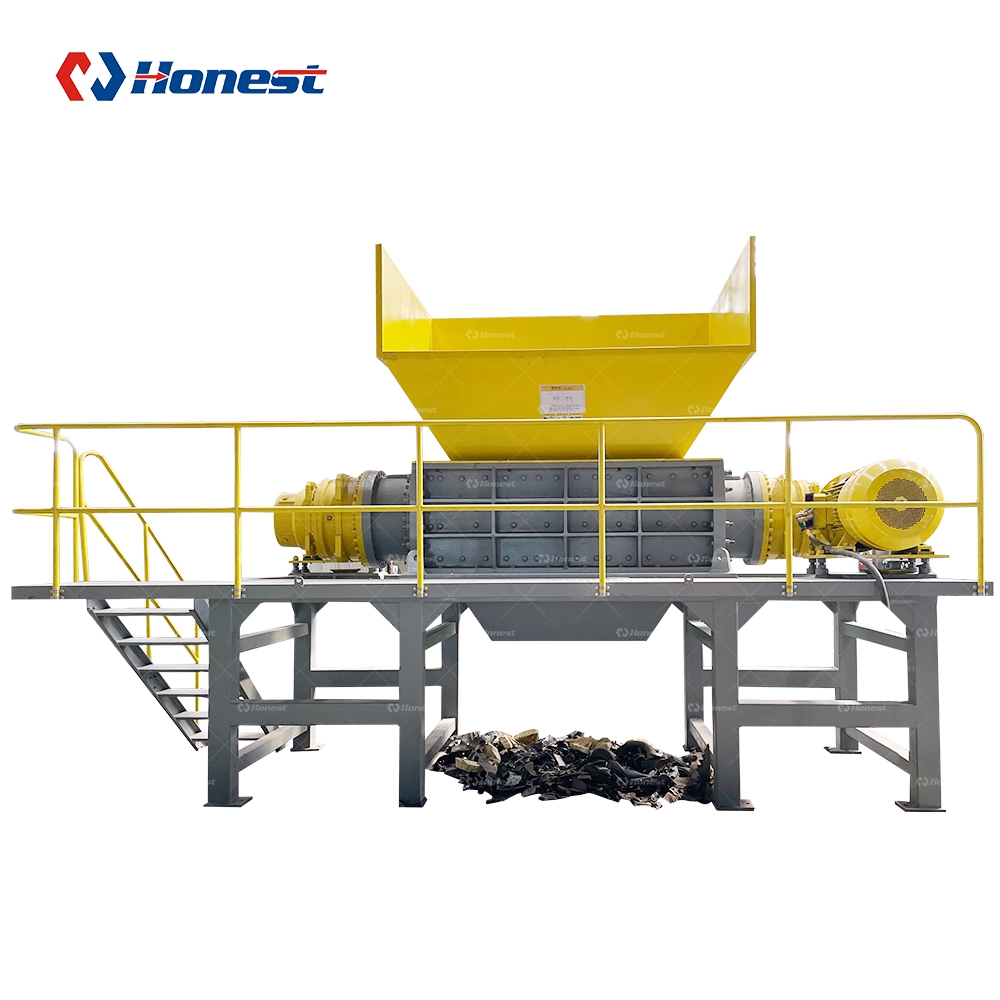
The primary shredder in a turnkey line is usually a dual-shaft machine designed for low-speed, high-torque operation. The cutter thickness and hook angle are selected based on expected material resistance. The shaft synchronization is maintained through a gearbox system designed to absorb shock loads without transmitting excessive stress to the motor.
The secondary processing unit, often a hammer mill or fine shredder, is responsible for achieving uniform particle size. Unlike the primary shredder, this unit operates at a higher speed and relies more on impact and attrition.
Magnetic separation is positioned immediately after the first or second reduction stage, depending on the level of material liberation. For non-ferrous separation, eddy current systems require stable particle size and minimal contamination, which again highlights the importance of upstream consistency.
The control system in a turnkey line is not merely for operation but for load management. Torque sensors on the shredder shafts feed real-time data into the PLC, allowing automatic adjustment of feed rate and rotation direction. This prevents jamming and reduces mechanical fatigue. Additionally, conveyor synchronization ensures that no single component becomes a bottleneck.
In practical operation, the performance of a turnkey shredding line depends less on maximum capacity and more on stability under fluctuating material conditions. A well-engineered system maintains consistent output even when input composition varies, which is critical for industrial recycling environments.
Henan Honest Heavy Machinery : http://www.honestshredder.com/,All rights reserved。
Welcome to visit Henan Honest website. If you want to learn more about our equipments, Contact us Now to find out what we can do for you next project!